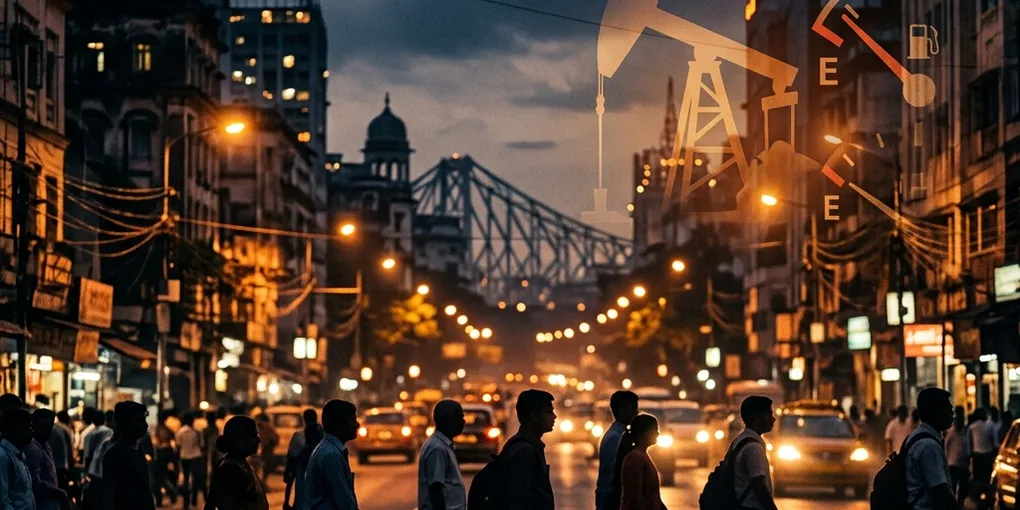
Fuel Conservation After Elections: A Fair Question on Timing, Accountability, and Public Sacrifice
When Citizens Are Asked to Sacrifice, Questions Naturally Follow
Prime Minister Narendra Modi recently urged Indians to reduce petrol and diesel consumption, avoid unnecessary foreign travel, reconsider destination weddings abroad, revive work-from-home practices, and reduce discretionary spending amid rising pressure from the West Asia crisis and global oil disruptions.
The reasoning is understandable.
India imports the majority of its crude oil, and tensions around the Strait of Hormuz — one of the world’s most important oil transit routes — have created genuine concerns over energy prices, inflation, and foreign exchange reserves. Rising crude oil prices affect everything from fuel costs to fertilizers and transportation.
But for many citizens, another question naturally emerges:
If the risks were visible months ago, why are serious appeals coming only now?
Was the Risk Already Visible Earlier?
The West Asia conflict did not appear overnight.
Market observers, economists, and geopolitical analysts had been discussing the possibility of oil supply disruption and rising energy prices since late February and early March as tensions escalated around Iran and the Strait of Hormuz. India’s dependence on imported crude oil makes such developments economically important.
This creates a reasonable public debate:
If warning signs existed earlier, should stronger preventive messaging, contingency planning, or public preparation have started sooner?
This is not necessarily about blame.
It is a question about timing.
In governance, timing matters. A crisis often feels easier to manage when people feel they were informed and prepared early rather than asked to adjust suddenly after risks intensify.
The Election Question: Optics Matter Too
Another concern many people raise is perception.
During election periods, political rallies, extensive travel, roadshows, security convoys, large-scale events, and campaigning continue at full scale. Critics argue that these activities also consume fuel and public resources.
Now, after elections, citizens are being asked to:
- Reduce fuel consumption
- Avoid foreign travel
- Postpone gold purchases
- Embrace work-from-home again
- Rethink discretionary spending
This naturally raises a difficult public question:
Should national restraint begin from the top as visibly as it is expected from citizens?
For many, this is less about economics and more about shared responsibility. People are often more willing to accept sacrifice when they feel leadership is visibly participating in the same discipline.
Why Governments Sometimes Delay Strong Messaging
To be fair, governments face difficult trade-offs.
Public warnings can trigger:
- Panic buying
- Hoarding
- Unnecessary fear
- Market instability
- Political uncertainty
Governments may sometimes avoid strong messaging too early if they believe situations can stabilize diplomatically or economically.
But there is also a risk in the opposite approach:
If people feel warnings arrive too late, trust can weaken.
The balance between avoiding panic and being transparent early is one of the hardest challenges in crisis governance.
Citizen Responsibility vs Government Accountability
There are two truths that can exist at the same time.
Truth 1: Citizens Can Help
Reducing unnecessary fuel use, improving efficiency, using public transport, and lowering waste are reasonable suggestions during an import-driven energy shock. Since India imports most of its oil, lower consumption can reduce pressure on foreign exchange reserves.
Truth 2: Governments Must Be Questioned
Citizens also have the right to ask:
- Were warning signs underestimated?
- Could preparation have started earlier?
- Was enough preventive action taken before the crisis deepened?
- Should leadership model the same restraint it asks from the public?
In a democracy, asking questions is not anti-government — it is part of accountability.
The Bigger Question: Why Do Major Issues Fade After Public Hype?
This concern goes beyond fuel.
Many people notice a pattern:
A major issue dominates headlines, public outrage rises, social media explodes, promises of action are discussed — and then attention slowly fades.
Whether it is economic concerns, political controversies, or high-profile international cases, people often ask:
What actually happened after the headlines disappeared?
- Sometimes investigations continue quietly.
- Sometimes legal systems move slowly.
- Sometimes media attention shifts to newer stories.
But the public frustration remains understandable: when something feels important, people expect visible progress, transparency, and accountability — not silence.
Final Thoughts
The current fuel and foreign exchange concerns linked to the West Asia crisis are real. The government’s appeal for restraint has a practical economic basis.
Yet citizens asking “Why now?” is also a fair democratic question.
Good governance is not only about responding during a crisis. It is also about whether preparation, communication, and leadership happen before pressure reaches ordinary people.
And perhaps the most important principle in difficult times is simple:
Sacrifice feels fairer when responsibility feels shared.